
Disclosure: This page may contain affiliate links. I may earn a commission at no extra cost to you if you purchase through one of these links.
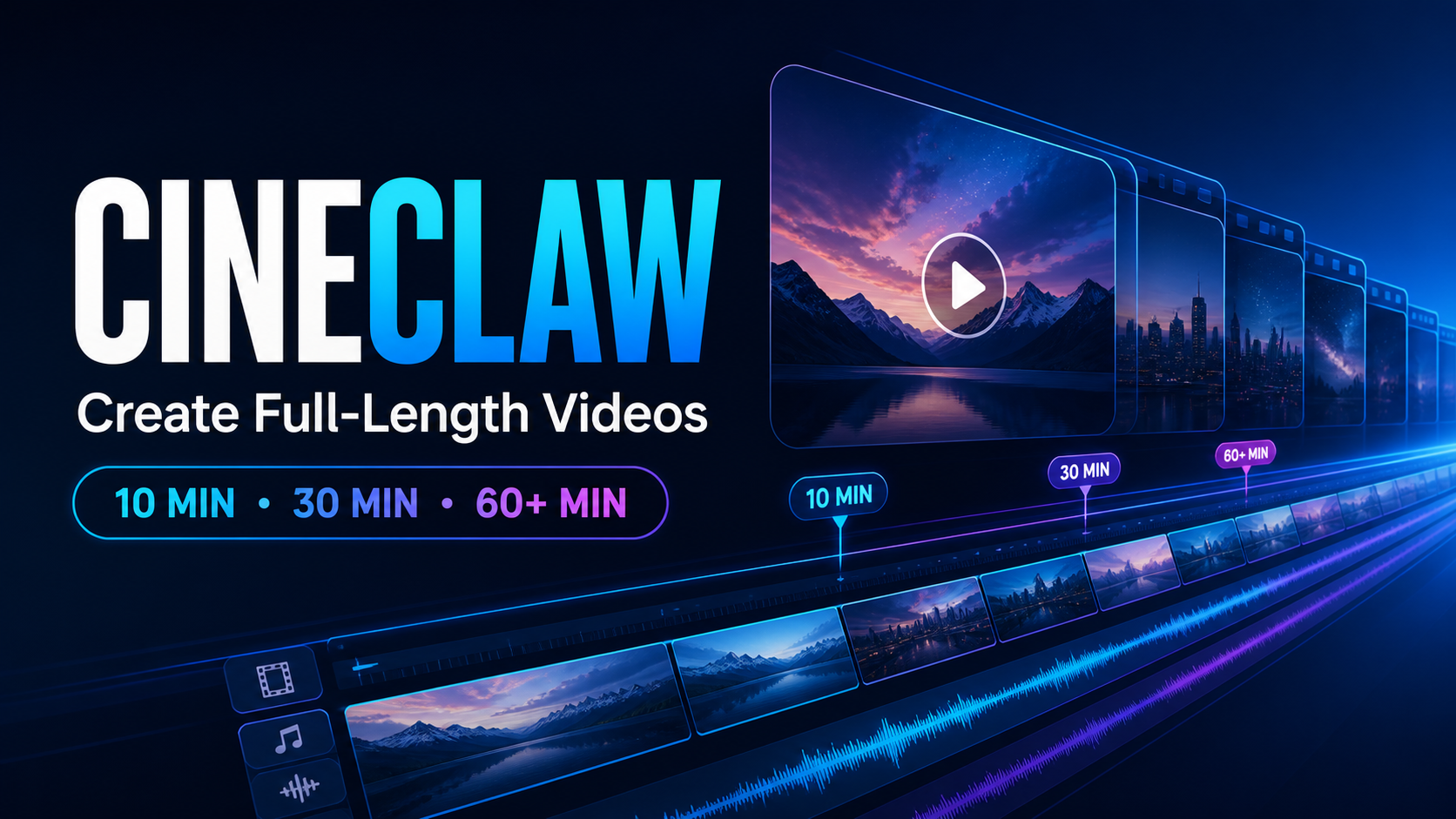
Short-form reels can be useful, but they are not the only way to build an audience. Tutorials, explainers, product comparisons, educational videos, and narrated stories often need more than a few seconds to deliver real value. CINECLAW is presented as a prompt-based video creation tool for people who want to Create 10min, 30min, 60min Or Even Longer Full Blown Videos without building every scene manually.
This guide looks at how beginners and small online business owners could use CINECLAW as part of a practical content workflow. It also covers prompts, quality checks, publishing, and realistic monetization options. Remember that AI-generated videos still need human review, and neither publishing nor monetization guarantees views, customers, or income.
Affiliate disclosure: This article contains an affiliate link. If you purchase through it, the publisher may receive a commission at no additional cost to you. AutoClip Agent Review: The World’s First AI “Video Employee” That Creates, Posts & Monetizes Videos
What Is CINECLAW?
CINECLAW is marketed as a solution for creating longer videos from a simple prompt. Instead of focusing only on brief social clips, its main appeal is the possibility of developing full-length content suitable for video platforms, websites, courses, presentations, and promotional campaigns.
A prompt-based workflow can reduce some of the repetitive work involved in outlining a video, organizing sections, preparing narration, and assembling visual elements. That does not mean the entire process should be left unattended. The strongest results usually begin with a clear idea and end with careful editing.
Before purchasing, review the current sales page for exact features, supported formats, usage limits, licensing terms, pricing, and any optional upgrades. Product details can change, so it is better to evaluate the current offer rather than rely on assumptions.
Why Consider Long-Form Video?
Reels and other short clips are designed for quick consumption. They can introduce an idea, demonstrate one tip, or direct viewers toward a longer resource. However, complicated topics are difficult to explain well in less than a minute.
Long-form video gives you room to answer questions, show a process, compare choices, and provide context. A gardening business could publish a 20-minute seasonal planting guide. A software affiliate could create a detailed product walkthrough. A freelance designer could explain an entire branding workflow rather than sharing one isolated design trick.
Longer does not automatically mean better. A 60-minute video should contain enough useful information to justify its length. Adding repetitive narration simply to reach a target duration can make the experience worse. Choose the shortest length that covers the subject properly.
Who Might Find CINECLAW Useful?
Affiliate marketers
Affiliate marketers can use long-form videos to explain problems, compare categories, demonstrate workflows, and discuss what buyers should check before choosing a product. Honest content should cover limitations and suitable use cases instead of making exaggerated claims.
Small business owners
A small business can turn customer questions into educational videos. Examples include a home maintenance guide, a salon aftercare video, a basic bookkeeping explanation, or an introduction to a professional service.
Course creators and coaches
Long-form tools may help create draft lesson content, supporting videos, or structured explanations. Any educational material should be checked by someone who understands the subject, especially when it involves health, money, law, or safety.
Faceless channel creators
People who do not want to appear on camera may be interested in narrated explainers, list videos, documentaries, or screen-based tutorials. A faceless format can still have a recognizable identity through consistent topics, visuals, pacing, and editorial standards.
How to Create a Long-Form Video with a Prompt
Step 1: Choose one clear viewer outcome
Start by deciding what the viewer should understand or be able to do after watching. Avoid a vague goal such as “make a video about email marketing.” A more useful goal would be “help a beginner plan a five-email welcome sequence for a small online store.”
This single outcome keeps the video focused and makes it easier to remove irrelevant sections.
Step 2: Select an appropriate duration
Match the length to the depth of the topic. A simple overview might need 10 minutes. A detailed tutorial with examples may need 30 minutes. A complete workshop, documentary-style presentation, or multi-part lesson could run for 60 minutes or longer.
Do not begin with a one-hour target unless the topic supports it. Beginners may find it easier to test a focused 10-minute project before attempting a much larger production.
Step 3: Write a detailed prompt
A useful prompt should identify the audience, objective, format, tone, sections, and boundaries. It should also explain what the video must avoid.
For example:
“Create a beginner-friendly 20-minute video explaining how a small handmade-products store can plan one month of email content. Include an introduction, four weekly themes, sample subject lines, a simple scheduling process, common mistakes, and a conclusion. Use plain language. Do not make income claims or invent statistics.”
This is more actionable than asking for “a long video about email.” It gives the system a structure while leaving room for creative presentation.
Step 4: Review the outline first
If the available workflow lets you inspect an outline, check it before generating or finalizing the entire video. Make sure the opening establishes the topic quickly, each section adds something new, and the conclusion gives the viewer a sensible next step.
For a 30-minute video, you might use five or six main sections. For a 60-minute lesson, chapters can help viewers navigate to the information they need.
Step 5: Check the script and narration
Read the script for factual errors, unsupported statements, awkward wording, and repetition. Verify names, dates, product information, instructions, and technical details independently.
Listen to the narration as well. Check pronunciation, pauses, emphasis, and speed. A polished visual sequence cannot compensate for narration that is difficult to understand.
Step 6: Inspect every visual
AI-selected or AI-generated visuals may not always match the narration. Look for distorted text, irrelevant images, inconsistent characters, distracting transitions, or material that could create copyright or trademark concerns.
Confirm that you have the necessary rights to use all images, music, video clips, voices, and other assets. Review CINECLAW’s current commercial-use terms before using generated content in monetized projects.
Step 7: Add your own perspective
Original value comes from more than changing a title. Add your own framework, examples, commentary, demonstrations, or conclusions. If you are discussing a product, distinguish between confirmed product details and your interpretation.
This editing step can make the finished video more useful and less like generic automated content.
Three Practical Video Ideas
A 10-minute beginner explainer
Create a focused introduction to one question your audience asks regularly. A website consultant might explain the difference between a domain name and hosting. The video could contain a short definition, an example, a buying checklist, and three common mistakes.
A 30-minute comparison guide
Compare different approaches to solving a problem rather than simply promoting one option. For example, discuss spreadsheets, dedicated software, and outsourced help for managing a small business content calendar. Explain who each approach may suit, along with possible disadvantages.
A 60-minute educational workshop
Build a complete workshop around a specific outcome, such as planning a basic online course. Divide it into chapters covering audience research, lesson structure, recording preparation, publishing options, and a final checklist. Include pauses or exercises so the viewer can apply the material.
Ways to Monetize Long-Form Videos
The phrase “monetize it in seconds” should be treated as a description of quick setup rather than guaranteed earnings. Monetization generally requires a suitable platform, an audience, compliant content, and an offer that matches the viewer’s needs.
Affiliate recommendations
You can link to relevant products mentioned in a tutorial or comparison. Clearly disclose the affiliate relationship, explain why the product is relevant, and avoid recommending tools you have not adequately researched.
Your own products or services
A useful video can introduce viewers to a template, consultation, course, membership, or service. The call to action should connect naturally to the topic instead of interrupting the video with an unrelated sales pitch.
Platform advertising
Some video platforms offer advertising programs, but eligibility rules and revenue vary. Check the current requirements of each platform and do not assume that uploading AI-assisted content will automatically qualify.
Lead generation
A video can direct interested viewers to a helpful checklist, newsletter, webinar, or contact form. This can support a longer customer journey even when the video does not produce immediate sales.
Important Quality and Compliance Checks
Before publishing, confirm that your content is accurate, original, and appropriate for the platform. Add disclosures for affiliate links and sponsorships. Avoid misleading titles, fabricated testimonials, unrealistic income claims, and copyrighted assets used without permission.
It is also wise to check the platform’s rules regarding AI-generated or synthetic media. Some platforms may require labels or disclosures in certain situations. Policies can change, so review them regularly.
Finally, watch the complete exported video. Check audio levels, captions, chapter transitions, spelling, links, and the final call to action. Long videos create more opportunities for small errors to slip through.
Is CINECLAW Worth Exploring?
CINECLAW may be worth considering if long-form production is a bottleneck and you want a prompt-based starting point. Its value will depend on the quality of its output, how much editing it requires, its licensing terms, and whether its workflow fits the type of content you publish.
It is not a replacement for subject knowledge, fact-checking, or a clear content strategy. Think of it as a production tool that may help organize and accelerate parts of the process.
If you want to see the current features, pricing, demonstrations, and terms, you can visit the official CINECLAW offer page here. Review the details carefully and consider starting with one focused video to decide whether the workflow suits you.
Conclusion
The ability to Create 10min, 30min, 60min Or Even Longer Full Blown Videos from a prompt could make long-form production more approachable for beginners. The key is not simply generating more minutes of content. It is creating a clear, accurate, well-edited video that solves a real audience problem.
Begin with one topic, choose a sensible duration, provide detailed instructions, and review every part of the result. A thoughtful human-led workflow will give your video a better chance of being useful, credible, and suitable for your business.
Frequently Asked Questions
What is CINECLAW used for?
CINECLAW is presented as a prompt-based tool for producing long-form videos. Potential uses include tutorials, explainers, comparison videos, educational lessons, and faceless content. Check the current product page to confirm its exact capabilities.
Can CINECLAW create videos longer than 60 minutes?
The offer promotes the creation of 10-minute, 30-minute, 60-minute, and even longer videos. Actual limits may depend on the current plan, settings, or product version, so confirm these details before purchasing.
Can beginners use prompt-based video creation tools?
Yes, beginners can use them, but results depend heavily on the prompt and review process. Starting with a specific 10-minute video is usually more manageable than immediately attempting a one-hour production.
Does a long video automatically earn money?
No. Video length does not guarantee views or revenue. Earnings may depend on content quality, audience demand, platform eligibility, promotion, and the relevance of any offer or advertisement.
Should AI-generated videos be edited before publishing?
Yes. Review scripts, narration, visuals, factual claims, licensing, captions, and platform compliance. Human editing is important for accuracy, originality, and a better viewer experience.


Leave a Reply