
Disclosure: This page may contain affiliate links. I may earn a commission at no extra cost to you if you purchase through one of these links.
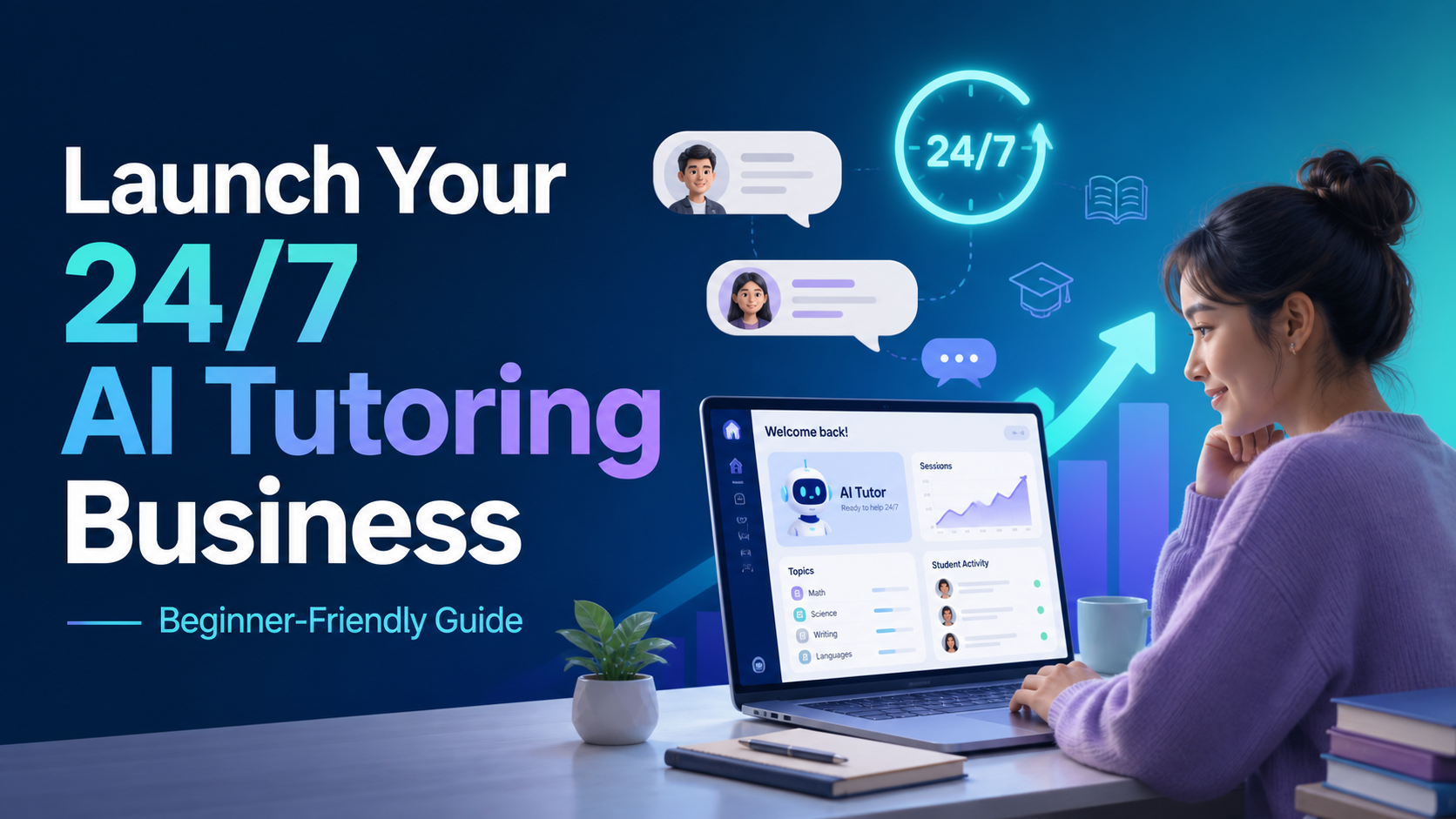
Artificial intelligence is creating new ways for entrepreneurs to deliver educational support without conducting every lesson personally. If you want to launch your own 24/7 AI tutoring business, you do not necessarily need to be a teacher, software developer, or online influencer. You do, however, need a focused audience, a useful offer, responsible safeguards, and a realistic plan for finding customers.
An AI tutoring business uses automated tools to answer questions, explain concepts, create practice activities, or guide learners through structured material. The system may be available around the clock, although availability always depends on the software, hosting provider, and internet connection. This model can reduce the amount of repetitive work involved in tutoring, but it does not eliminate the need for human oversight.
This guide explains how the business model works, what you can offer, and the practical steps required to get started.
What Is a 24/7 AI Tutoring Business?
A 24/7 AI tutoring business gives learners access to an AI-powered educational assistant. Customers might use it to review a difficult topic, generate practice questions, receive explanations, or follow a learning plan at a convenient time.
Unlike traditional tutoring, the owner does not need to be present for every interaction. Your role is to choose the audience, configure the learning experience, provide suitable content, monitor quality, handle customer support, and market the service.
The phrase “24/7” generally describes automated access rather than continuous human support. You should explain this distinction clearly on your website so customers understand what they are purchasing. How to Build a Sustainable Online Business with High-Ticket Affiliate Marketing
Possible AI tutoring formats
- Subject support: Help with areas such as basic mathematics, grammar, business writing, or introductory coding.
- Exam preparation: Practice questions, study schedules, flashcards, and topic reviews for a specific type of assessment.
- Workplace training: Guided learning for software, customer service procedures, sales terminology, or internal company knowledge.
- Language practice: Vocabulary exercises, simple conversations, writing prompts, and grammar explanations.
- Skill development: Support for hobbies and practical skills such as photography concepts, digital marketing basics, or spreadsheet fundamentals.
A narrow, clearly defined tutor is often easier to explain and promote than a general tool that claims to teach everything.
Can You Start Without Being a Teacher or Tech Expert?
You can build this type of business without formal teaching or programming credentials, but you should not misrepresent your qualifications. If you are not a certified educator, avoid describing yourself as one. Instead, position the service as an AI-powered study assistant, practice tool, or learning resource.
You also do not need to create an AI model from scratch. Many platforms provide templates, visual setup tools, hosted chat interfaces, and other beginner-friendly features. The exact setup process, costs, and capabilities vary, so examine any platform carefully before paying for it.
Subject knowledge still matters. You can provide that knowledge yourself, use appropriately licensed materials, or work with a qualified subject specialist. AI-generated educational content should be reviewed because it can be incomplete, outdated, or incorrect.
Why Niche Selection Matters
Trying to serve every possible learner can lead to vague messaging and an inconsistent tutoring experience. A specific niche helps you understand what customers need, what questions they ask, and where you can reach them.
How to identify a practical niche
Start by listing topics you understand or markets you can research responsibly. Then consider the following questions:
- Does the audience have a clear learning problem?
- Would learners benefit from help outside normal business hours?
- Can you create or license reliable learning material?
- Can the topic be explained safely through an automated assistant?
- Are people already paying for courses, tutors, books, or study tools in this area?
Avoid high-risk topics unless suitable experts and safeguards are involved. An AI tutor should not replace professional medical, legal, financial, or mental health advice. Educational services for children also require careful attention to privacy, parental consent, advertising rules, and applicable child-protection laws.
Simple niche examples
One business might create a tutor that helps adult beginners practice spreadsheet formulas. Another could focus on conversational vocabulary for travelers. A small marketing agency could build a training assistant that helps new clients understand common digital advertising terms.
Each example has a defined user, a specific outcome, and clear limits. That makes it easier to create useful content and set appropriate expectations.
How to Launch Your Own 24/7 AI Tutoring Business
1. Define one learner and one core problem
Write a short statement describing whom you serve and what the tutor helps them do. For example: “This AI study assistant helps first-time online sellers understand basic product listing terminology through short explanations and quizzes.”
This statement should guide your content, website copy, pricing, and promotional strategy.
2. Decide what the tutor will and will not do
Create boundaries before building the service. Decide which subjects it can discuss, the level of detail it should provide, and when it should recommend outside help. Include clear notices explaining that AI can make mistakes and that important information should be verified.
If the tutor supports academic work, encourage learning rather than cheating. It can explain methods, offer hints, and generate practice problems without completing graded assignments on the learner’s behalf.
3. Choose your platform
Compare tools based on ease of use, customization, pricing, data handling, customer limits, commercial licensing, integrations, and support. Confirm whether you are allowed to charge customers for access and whether usage fees increase as more people use the tutor.
If you are exploring a ready-made option, you can review the AI Private Tutor offer here. Check the current sales page, terms, pricing, refund policy, and included features for yourself before deciding whether it fits your plan. This is an affiliate link, which means the publisher may receive a commission if you purchase through it, at no additional cost to you.
4. Build a reliable knowledge base
Gather accurate material that you own, have permission to use, or can legally reference. Organize it into lessons, definitions, examples, exercises, and frequently asked questions. Do not copy paid courses, textbooks, or websites without authorization.
Break complex topics into short sections. A beginner tutor might follow a sequence such as explanation, worked example, practice question, hint, answer, and next step. This structure can make the learning experience more consistent.
5. Test the tutoring experience
Ask the tutor easy, difficult, unclear, and deliberately misleading questions. Check whether it stays within its intended subject, admits uncertainty, and avoids fabricating answers. Test spelling variations and common beginner misunderstandings as well.
Invite a small group of relevant users to try it. Ask where they became confused, which answers were useful, and what information was missing. Feedback does not guarantee commercial success, but it can reveal problems before a wider launch.
6. Select a revenue model
Your offer should be simple enough for a customer to understand quickly. Common options include:
- A monthly subscription for ongoing access
- A one-time fee for a defined study program
- Tiered plans with different usage limits or resources
- A business license for teams or organizations
- A free basic tutor with optional paid lessons or tools
Calculate platform charges, payment processing fees, content costs, customer support time, taxes, and marketing expenses before choosing a price. Recurring revenue can be attractive, but it also creates an obligation to maintain the service and continue delivering value.
7. Create a clear landing page
Your landing page should identify the intended learner, explain the tutor’s purpose, show how access works, and state what customers receive. Include transparent pricing, cancellation terms, privacy information, contact details, and realistic limitations.
A short demonstration can help prospective buyers understand the experience. Instead of making broad claims, show a sample question, the type of response the tutor provides, and an example practice activity.
8. Launch on a manageable scale
Begin with a small audience so you can monitor usage and answer support requests. Keep records of common questions, failed interactions, refund reasons, and requested features. Use these observations to improve the service rather than adding features without a clear purpose.
How to Promote an AI Tutoring Service Without Being an Influencer
You do not need a large social following to begin. You need access to places where your intended customers already seek help.
Create problem-focused content
Publish useful articles, short videos, checklists, or email lessons that answer specific beginner questions. A spreadsheet tutor, for example, could publish guides about common formula errors or organizing a first budget sheet. Each resource can naturally introduce the tutor as an additional way to practice.
Build relevant partnerships
Contact course creators, consultants, community owners, small schools, or businesses that serve the same audience without offering the same product. A partnership might involve a demonstration, bundled resource, referral arrangement, or limited trial. Disclose paid and affiliate relationships clearly.
Use direct outreach carefully
Personalized outreach can work for business-focused tutoring. Instead of sending mass messages, identify organizations that have a genuine training need and explain how your tool may help. Offer a concise demonstration and give recipients an easy way to decline further contact.
Consider paid promotion only after testing
Advertising can become expensive when an offer has not been validated. Test your landing page, onboarding, and pricing with a small audience first. If you later use paid ads, set a budget you can afford to lose and track conversions, refunds, and customer retention rather than focusing only on clicks.
Trust, Privacy, and Quality Control
Trust is especially important when people use a product to learn. Explain that responses are generated by AI and may require verification. Provide a way to report incorrect or inappropriate answers, and review those reports promptly.
Collect only the customer information you genuinely need. Learn how your platform stores conversations and whether data may be used for model training. Publish a privacy policy suited to your actual practices and seek professional guidance when regulations apply.
Review the tutor regularly. Update outdated material, test important answers, monitor costs, and confirm that links and payment systems still work. Automation can deliver the experience, but the owner remains responsible for maintaining the business.
Conclusion
The opportunity to launch your own 24/7 AI tutoring business is not limited to teachers, programmers, or established creators. A beginner can start by choosing a narrow learning problem, using an appropriate platform, organizing reliable material, and testing the service with real users.
The strongest approach is to treat AI as a delivery tool rather than a shortcut to effortless income. Clear positioning, responsible oversight, customer support, and consistent improvement all matter. If you want to investigate a platform designed around this business model, visit the AI Private Tutor page and compare its current details with your audience, budget, and technical requirements before making a purchase.
Frequently Asked Questions
Do I need teaching qualifications to start an AI tutoring business?
Not necessarily, but you must describe your role and qualifications honestly. Position the product as an AI study assistant or educational resource if you are not a certified teacher. For specialized or regulated subjects, consider working with a qualified professional.
Can an AI tutor operate completely without human involvement?
No service should be treated as entirely hands-off. AI can automate many learner interactions, but a human should monitor accuracy, handle support, update content, review reported problems, and manage billing and privacy obligations.
How much does it cost to start?
Costs depend on the platform, AI usage, website, payment processor, content, legal requirements, and marketing approach. Review fixed and usage-based expenses before launching, and avoid committing money you cannot afford to lose.
What can I charge customers for?
You can charge for access to a specialized tutor, structured lessons, practice materials, progress features, or a complete learning program, provided your platform and content licenses permit commercial use. Pricing should reflect your costs and the value delivered to the intended audience.
Is a 24/7 AI tutoring business guaranteed to make money?
No. Results depend on factors such as demand, product quality, pricing, competition, marketing, operating costs, and customer retention. Starting small and testing assumptions can help you make better decisions, but it cannot guarantee income.

Leave a Reply