

Disclosure: This page may contain affiliate links. I may earn a commission at no extra cost to you if you purchase through one of these links.
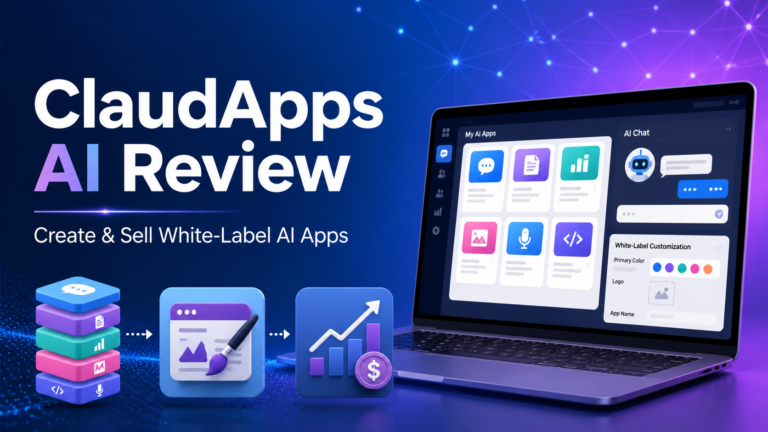
Creating an AI-powered tool normally requires an idea, technical skills, development time, testing, and ongoing maintenance. ClaudApps AI is presented as a simpler alternative: a platform designed to help users create ready-to-sell, white-label AI apps quickly, with the sales page promoting app creation in as little as 60 seconds.
That headline will naturally appeal to affiliate marketers, freelancers, agencies, and small online business owners. However, generating an app is only one part of building a useful offer. You still need to choose the right audience, review the output, understand the commercial license, set a sensible price, and provide a good customer experience.
This ClaudApps AI review looks at the platform from a practical, beginner-friendly perspective. It explains what white-label AI apps are, how they can be used, and what you should evaluate before deciding whether this type of tool fits your business.
Disclosure: This article contains an affiliate link. If you purchase through it, the publisher may receive a commission at no additional cost to you.
What Is ClaudApps AI?
ClaudApps AI is marketed as an AI app creation platform that lets users build customizable applications they can brand and potentially sell as their own. The main attraction is speed. Rather than coding an application from the ground up, users can begin with an AI-assisted creation process.
The phrase “ready to sell” generally means the platform aims to reduce the technical work involved in producing an app. It does not necessarily mean every generated app will be ready for the public without review. A responsible seller should test the app, improve its instructions, confirm that it solves a real problem, and make sure its branding and sales message are accurate.
Product features, pricing, usage limits, and licensing terms can change. Review the current ClaudApps AI sales page and terms before purchasing, especially if your plan is to resell apps or give clients access. RoboTech Guide: Publish And Sell Unlimited Unique Software Apps
What Does White-Label Mean?
A white-label product is created using another company’s underlying technology but can be presented under your own business name or brand, subject to the provider’s license. For example, a marketing agency might offer a branded content-planning assistant to local businesses without developing the software independently.
White-label access can save time, but it does not automatically transfer every possible ownership right. Check whether you may change the app name, add your logo, sell access, create apps for clients, charge recurring fees, or transfer an app to a buyer. The specific license matters more than the general phrase “white-label.”
Who Might Find ClaudApps AI Useful?
Affiliate Marketers
Affiliate marketers could create small tools that complement the products or services they already discuss. A marketer in the email marketing niche, for example, might offer a subject-line idea generator or campaign-planning assistant.
The tool should provide independent value rather than acting only as a container for affiliate links. Useful tools can support an audience, but they do not guarantee clicks, traffic, or commissions.
Freelancers and Agencies
Freelancers may be able to use white-label apps as an additional client service. A social media freelancer could create a branded brainstorming assistant for a restaurant, coach, or online shop. An agency might include access as part of a wider service package.
Client work requires clear expectations. Explain what the app does, what it does not do, and whether the client is paying for ownership, access, setup, or ongoing support.
Coaches and Course Creators
A coach could build a companion app around a defined process, such as preparing questions for a coaching session or turning broad goals into weekly action items. Course creators could offer a study assistant that helps learners review concepts covered in their training.
Any app providing guidance in sensitive areas such as health, law, or finance needs careful boundaries and appropriate disclaimers. AI output should not be presented as professional advice.
Small Online Business Owners
Small business owners may use AI apps as lead magnets, entry-level products, customer resources, or internal workflow tools. The strongest use case will usually be narrow and practical. A focused tool for one audience is often easier to explain than a general assistant that claims to do everything.
Can You Really Create an AI App in 60 Seconds?
ClaudApps AI is promoted as being able to create an app in just 60 seconds. This likely refers to the initial generation process rather than the complete journey from idea to a polished commercial launch.
Even if the software produces a working starting point quickly, allow time for customization, testing, proofreading, positioning, pricing, and customer instructions. You may also need to create a landing page, payment process, privacy information, and support plan.
A useful way to view the 60-second message is as a potential speed advantage for creating a first draft. The quality of the final offer will still depend on your decisions and how carefully you prepare it.
How to Create and Sell White-Label AI Apps
Step 1: Choose One Specific Audience
Avoid starting with “everyone who needs AI.” Select a recognizable group with a repeated task. Examples include Etsy sellers writing product descriptions, fitness coaches planning educational posts, property managers drafting routine tenant messages, or tutors creating revision questions.
Be careful with niches that involve regulated or high-risk advice. A drafting or organizational tool is different from a tool that diagnoses conditions, gives legal conclusions, or recommends investments.
Step 2: Identify a Small, Frequent Problem
Look for a task that is repetitive, time-consuming, and easy to explain. Instead of creating a broad “business growth app,” consider a “weekly promotion idea planner for independent cafés.” Specificity makes the benefit clearer and gives you a better framework for testing the output.
Step 3: Generate the Initial App
Use ClaudApps AI to create the initial version based on your audience and intended outcome. Provide clear instructions about the app’s role, the information it should request, the format of its responses, and any limits it should follow.
If the platform offers templates or guided setup options, choose the one closest to your use case. Do not add unnecessary functions merely to make the product appear larger. Simplicity can be an advantage for beginners.
Step 4: Customize the Brand and Instructions
Give the app a clear, descriptive name. Add your approved logo, colors, welcome message, usage instructions, and contact details where the platform allows. Avoid names that could imply an unsupported relationship with another company or trademark.
Tell users what information they need to provide and what type of result they can expect. Clear onboarding can make a simple app easier to use.
Step 5: Test Several Realistic Scenarios
Test the app with normal, vague, incomplete, and unusual inputs. Check whether the responses remain relevant and appropriately formatted. Look for factual errors, unsupported claims, repetitive text, and advice that exceeds the app’s intended scope.
Ask a small number of trusted testers to try it without your help. Their questions can reveal confusing instructions or missing steps. Never assume that an automatically generated app is error-free.
Step 6: Confirm Your Resale Rights
Before accepting payment, read the current license. Confirm what “sell” means under the terms. Determine whether you can sell individual apps, charge for access, build for clients, use your own domain, or include the app in a membership.
Also review any limits related to user numbers, AI usage, storage, integrations, or ongoing platform access. These factors may affect your pricing and delivery model.
Step 7: Select a Simple Business Model
You could sell one-time access, include the app in a service package, charge a setup fee for a custom client app, or add it as a bonus to an existing product. A recurring subscription may be suitable only if you provide continuing access, updates, support, or additional value.
Price the offer based on its usefulness, support requirements, operating costs, and market alternatives. Avoid presenting an inflated “value” that you cannot reasonably justify.
Step 8: Create an Honest Sales Page
Explain who the app is for, the task it helps with, what buyers receive, and what limitations apply. Include screenshots or a demonstration if your license permits it. Do not promise that using the app will guarantee income, customers, search rankings, or productivity gains.
Your refund policy, support details, privacy information, and terms should be easy to find. If users enter confidential business information, explain how they should handle sensitive data and refer to the platform’s current privacy terms.
Practical White-Label AI App Examples
- Local Business Review Reply Helper: Drafts polite response ideas for positive and negative reviews while reminding owners to check details before posting.
- Online Store Description Planner: Organizes product features, audiences, and tone into a first-draft description that the seller can edit.
- Freelance Proposal Assistant: Helps freelancers structure project scope, deliverables, timelines, and client questions without replacing a formal contract.
- Course Revision Question Generator: Creates practice questions from topics supplied by a student or instructor.
- Content Brief Builder: Turns a topic, target reader, and business goal into a structured writing brief for human review.
These examples focus on drafting and organization rather than guaranteed outcomes. The seller still needs to test each app and clarify that users are responsible for reviewing final outputs.
Potential Benefits and Limitations
Potential Benefits
- May reduce the technical barrier to creating a basic AI app.
- Could help users turn niche knowledge into a simple digital tool.
- White-label options may support custom branding, depending on the license.
- Fast generation can make it easier to test ideas before investing in custom development.
- Apps may complement freelance services, courses, memberships, or affiliate content.
Points to Consider
- AI-generated results can be inaccurate or unsuitable and require human review.
- The advertised creation time does not include research, testing, branding, and marketing.
- Your resale options depend on the current license and usage terms.
- You may rely on the platform for hosting, AI processing, updates, or continued access.
- Creating an app does not guarantee demand or sales.
Is ClaudApps AI Worth Considering?
ClaudApps AI may be worth exploring if you have a defined audience, a practical app idea, and an interest in selling digital services without learning software development first. Its biggest appeal is the possibility of creating a functional starting point quickly and applying your own branding.
It may be less suitable if you need full control of source code, complex custom integrations, strict enterprise compliance, or complete independence from a third-party platform. In those cases, custom development or a more technical no-code solution may be a better fit.
Conclusion
ClaudApps AI presents an accessible route for beginners who want to create and sell white-label AI apps. The advertised 60-second creation process could make idea validation faster, but a responsible launch still requires research, customization, testing, clear licensing, and honest marketing.
The best approach is to start with one audience and one narrow problem. Build a simple app, test it carefully, and make the limitations clear. This is more sustainable than creating a large collection of generic tools without knowing who needs them.
If the concept matches your business, you can visit the official ClaudApps AI offer page to review the latest features, pricing, license terms, and refund policy before making a decision.
Frequently Asked Questions
What is ClaudApps AI used for?
ClaudApps AI is presented as a platform for creating customizable AI applications that users may brand and sell, subject to the current license. It may be useful for digital products, client services, lead-generation tools, or resources included with existing offers.
Do I need coding skills to use ClaudApps AI?
The platform is marketed toward users who want to create AI apps without building software from scratch. Check the current product demonstration to see what setup and customization skills are required.
Can I sell apps created with ClaudApps AI?
White-label and resale capabilities are central to the offer, but you should read the current license before selling anything. Confirm which sales models, branding options, client uses, and access arrangements are permitted.
Does it really create apps in 60 seconds?
The sales message promotes app creation in as little as 60 seconds. Treat that as an estimate for generating an initial app, not the total time needed for research, testing, customization, compliance, and launch.
Will a white-label AI app make money automatically?
No. Results depend on factors such as audience demand, app usefulness, pricing, positioning, marketing, competition, and support. Creating an app does not guarantee traffic, customers, revenue, or profit.


Leave a Reply